
Choose a Chicago Heights Resident Search Path
A useful Chicago Heights search begins by defining the question. A current parcel question belongs in the Cook County Assessor search or CookViewer. A deed party belongs in the Cook County Clerk Recordings Search. An individual registration check belongs in the Illinois voter lookup, while an older household is more likely to appear in a city directory, reverse directory, telephone book, newspaper, or census schedule. A public case result may help distinguish two people with the same name, but it is only an index clue until the official court file confirms it.
No official source supplies a complete list of everyone living at an address. Property systems center on parcels and assessment facts; a situs address is not proof of occupancy. Voter access is designed to confirm a specific person, and protected registrations are withheld. Renters, relatives, and unlisted household members may leave no current open roll. Treat every match as evidence of the relationship stated by that source, then verify identity with a second anchor such as a PIN, case number, date, relationship, or directory year.
- Normalize the name or address, including direction, unit, spelling variants, and maiden names.
- Find the parcel in the Cook County Assessor Property Search and save its PIN.
- Carry that PIN into CookViewer, the Clerk recording index, and the Treasurer system rather than relying on a street label alone.
- Use the Illinois registration lookup only for an exact person whose matching details are already known.
- For historical work, ask the Chicago Heights Public Library for the relevant directory, newspaper, phone-book, or map year.
- When a portal stops, use the counter, mail form, reference desk, archive request, or Illinois FOIA channel documented by the custodian.
Offices Behind Chicago Heights Resident Records
Chicago Heights is not the Cook County seat, so resident-record work crosses city, county, and state lines. The City Clerk handles municipal records and local vital-registration routes at City Hall. Cook County offices maintain recordings, assessments, elections, and county vital records. The Circuit Court’s Sixth Municipal District in Markham serves Chicago Heights cases. State agencies operate the exact-person voter check, statewide court repository, professional-license lookup, and older genealogy channels. The Chicago Heights street directory explains the address chain in detail; the cards below identify the three most common starting offices.
Cook County Clerk Recordings Division
118 N. Clark Street
Chicago, IL 60602
312-603-5050
Cook County Assessor
118 N. Clark Street, Third Floor
Chicago, IL 60602
312-443-7550
Cook County Clerk Elections
69 W. Washington Street
Chicago, IL 60602
312-603-0906
A Chicago Heights Address Has Several Identities
The same place can carry a property location, postal address, legal description, and parcel index number. Cook County explicitly warns that its Property Location field is not a legal or postal mailing address. CookViewer may also display Chicago Heights alongside Bloom Township, a tax municipality, school district, library district, park district, ward, and ZIP fields. Those labels describe different administrative layers; none proves that a named person occupies the parcel.
PIN
The Property Index Number is the parcel’s durable cross-system key. Cook County tools may show ten-digit, fourteen-digit, dashed, or undashed forms. Preserve the displayed version and legal description when a parcel split, condominium unit, stacked parcel, or old street label makes the address uncertain.
The neutral 129 Floyd Lane research sample illustrates the method: its PIN is 32-08-410-009-0000, and the parcel layer associates it with 60411 and Bloom Township. The sample is useful for checking fields, not for naming or inferring an occupant. When Assessor and CookViewer snapshots disagree slightly on an age or land-area field, record the source and access date instead of silently forcing the figures to match.
Follow the PIN Into Cook County Recordings
The former Cook County Recorder of Deeds is no longer a separate office. On December 7, 2020, its functions moved into the Cook County Clerk. Older references may still say “Recorder,” but the current route is the Cook County Clerk Recordings Search. The public index accepts address or PIN searches, while its advanced form adds grantor, grantee, document type, recorded dates, legal description, and trust-number fields.
The live portal showed an indexed-through date of August 6, 2026 during research. That date is not a promise that every earlier instrument is online. Official guidance describes online real-estate records from 1985 forward; older tract books and some categories require office verification. Index viewing is free, while document images or certified copies may carry the current Clerk fee. For a chain of title, begin with a known parcel, open the newest deed, then search the seller as an earlier grantee. Confirm each handoff by PIN, legal description, and recording number.
The Cook County Clerk landing page shown below is the gateway to recordings, elections, and vital-record services.
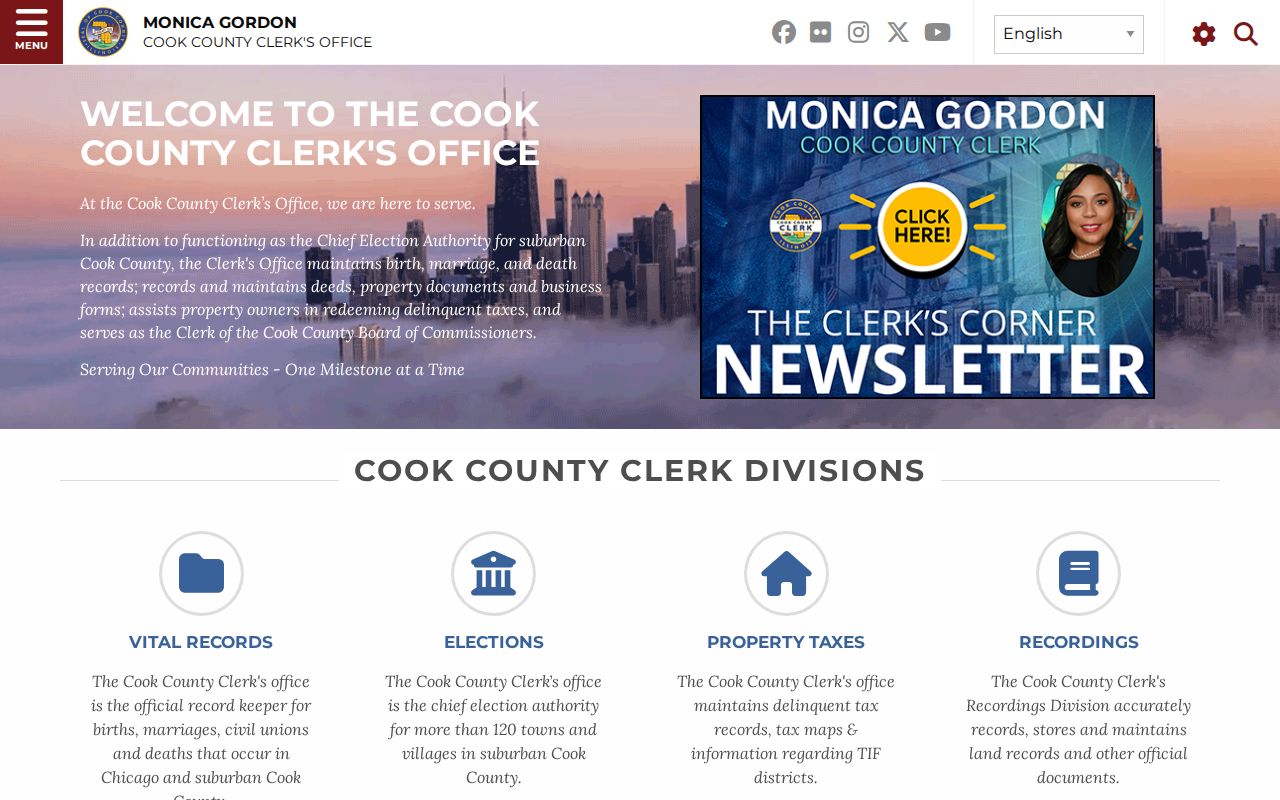
Its division-based layout is a reminder to choose the custodian first: a recording search, birth certificate, and voter question are different requests even when the Clerk administers all three.
Current Chicago Heights Directory-Like Sources
Modern official systems list people only within a defined public role. An owner may appear in a recorded deed or tax mailing trail; a voter lookup returns an individual status match; a court index names parties to public cases; a business filing may name an officer or registered agent. These are not interchangeable statements of residence. Search fields and access rules help show what each result can establish.
| Source | Who It Lists | Keeper | Access |
|---|---|---|---|
| Assessor and CookViewer | Parcel and assessment facts | Cook County | Free address or PIN tools |
| Illinois voter lookup | One known registrant | State Board of Elections | Multi-field exact match |
| Recordings index | Parties to recorded instruments | Cook County Clerk | Free index; copies may cost |
| Odyssey Case Search | Parties in public case summaries | Clerk of the Circuit Court | Online summary and courthouse file |
| Municipal archive | Officials and named city actions | Chicago Heights Clerk | Keyword, category, and date search |
A broad name match should be narrowed by a second independent anchor. A Chicago Heights resident lookup should separate a historical resident, voter-status check, public case, family event, and business affiliation so a filing address is not mistaken for a home address.
Voter Status Is a Match, Not a Street Roster
The Illinois Online Voter Registration Application lookup asks for a name, birth date, ZIP, street number, and a dynamically selected street name. Those extra fields are not optional browsing filters; they make the public result a check on one already-known person. The response can confirm registration and polling-place information, but it does not reveal ballot choices and cannot be browsed as a Chicago Heights household list.
Illinois makes computerized voter data available through a separate request process for bona fide political purposes, with certifications and fees. That restricted file is not a shortcut for personal address hunting. Cook County’s voter-information page and the city Clerk can help with registration and precinct questions. Protected registrations, including safety-related address protections, are not open leads. If a lookup fails, recheck the exact street format and current ZIP rather than treating no result as proof that the person moved.
Chicago Heights Court Results Need an Official File Check
The Circuit Court of Cook County serves Chicago Heights through the Sixth Municipal District courthouse in Markham. Odyssey Case Search supports a last-name/first-name pattern, wildcard searching, case type and date filters, and result columns such as case number, style, filing date, status, and location. The statewide re:SearchIL portal supplies another route for eligible electronic records, while federal matters belong in PACER and the Northern District of Illinois.
An online docket is an informational summary, not the official court file. Recent entries, sealed material, restricted cases, and documents not available remotely require the Clerk’s counter or a courthouse public-access terminal. Save the case number and courthouse location before requesting a file. A matching name alone does not establish that the party is the Chicago Heights resident being researched; pair it with the date, address contained in a public document, party role, or another reliable record.
The Clerk’s online case-information guide explains the remote search and its limits.
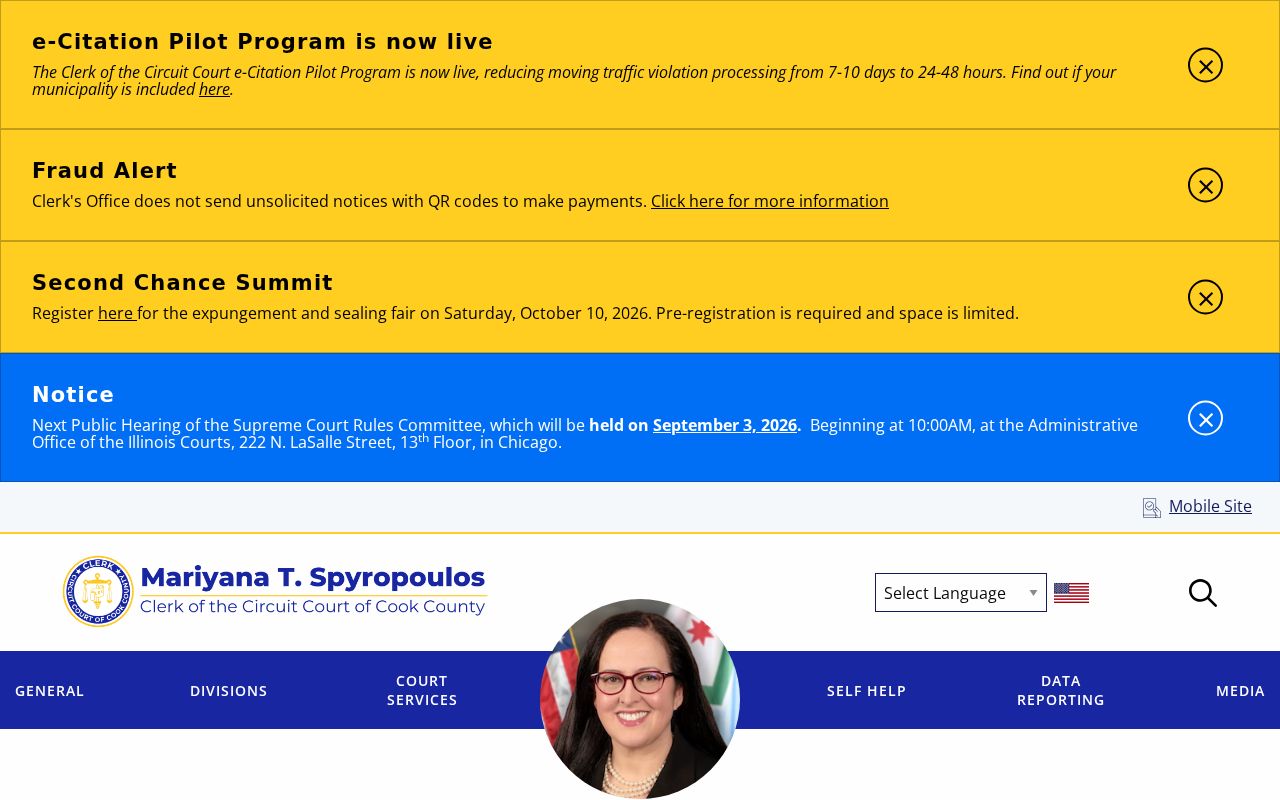
The official warning around informational summaries is the reason a consequential conclusion should rest on the clerk file rather than a search-result row.
Vital Records Have Eligibility Gates
Births and deaths recorded in Chicago Heights may begin with the local registrar at the City Clerk, while the Cook County Clerk supplies county-certified birth, death, marriage, and civil-union records. The Illinois Department of Public Health is the state route for copies, marriage verification, and genealogy services. These collections are not public name indexes. Applications require the relationship or interest allowed for the record, identification, and the custodian’s current payment and submission method.
Illinois Vital Records Act sections 24 and 25, 410 ILCS 535/24–25, protect newer records while defining genealogy exceptions. Uncertified births older than 75 years and deaths older than 20 years have genealogy routes. Archive transfer periods can apply to birth records at 100 years, death records at 50 years, and marriage records at 75 years, with pre-1916 indexes and IRAD or approved repositories filling older gaps. IDPH marriage verification is an index-based state response, not the same item as a certified county marriage record.
The IDPH birth-record page sets out the official state access path.
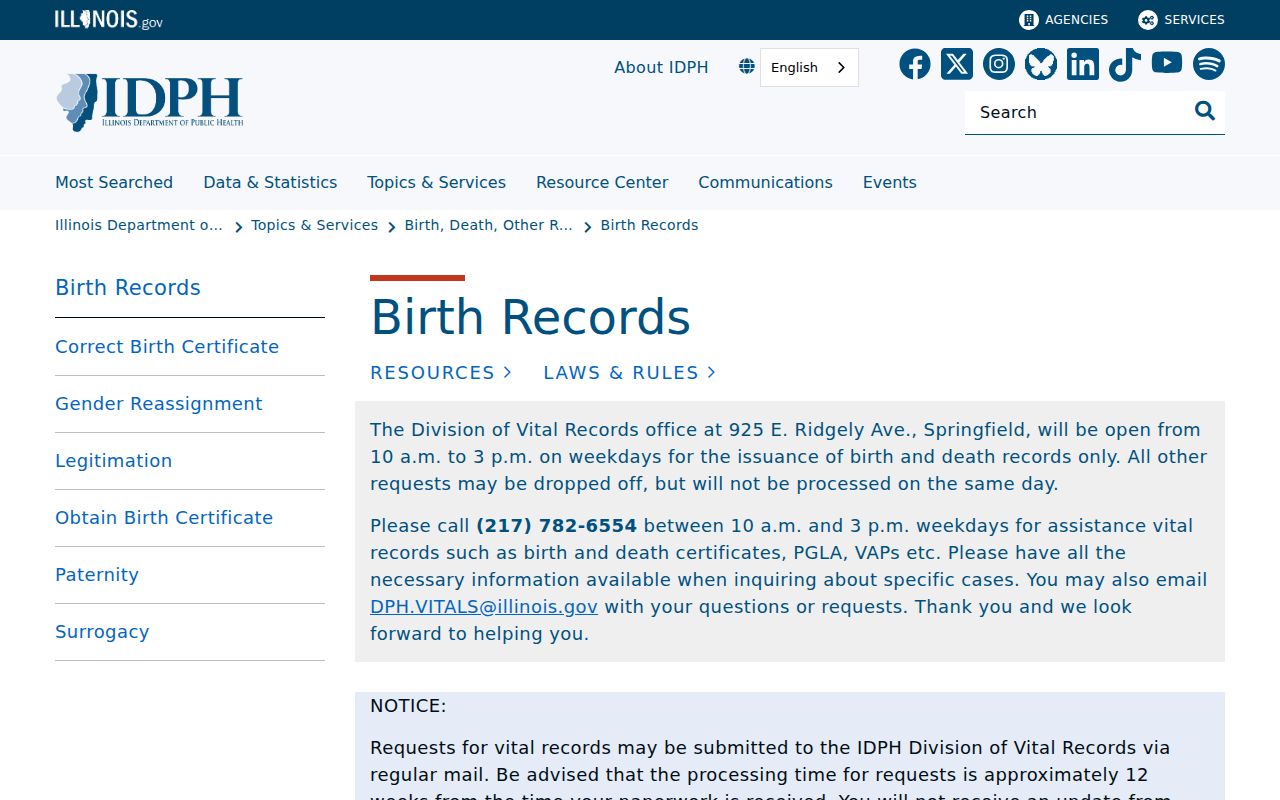
Its eligibility-first approach shows why a family-history search may need to shift from a certified-copy request to the statutory genealogy or archives channel.
City Hall Is the Local Records Fallback
The Chicago Heights Clerk’s Office is at 1601 Chicago Road, Chicago Heights, IL 60411, with published weekday hours of 8:30 a.m. to 5 p.m. and phone 708-756-5304. It handles municipal records, ordinances, maps, local registrar information, licensing administration, notary service, and voter-registration help. The city archive can search budgets, audits, and news by keyword, category, time period, and start or end date. It can surface officials and dated actions, but it is not a resident database.
For a specific nonpublished city record, Chicago Heights provides an online FOIA form and a printable form. The request should identify the department, date range, address or record number, and the exact item sought. Illinois Freedom of Information Act, 5 ILCS 140, governs this route; the city form states the ordinary five-working-day response framework. Code Enforcement and the City Engineer are better first contacts for permits, inspections, street, planning, zoning, floodplain, and infrastructure records, with FOIA as the documented route for a missing public file.
The Chicago Heights FOIA guidance displays the city’s submission options.
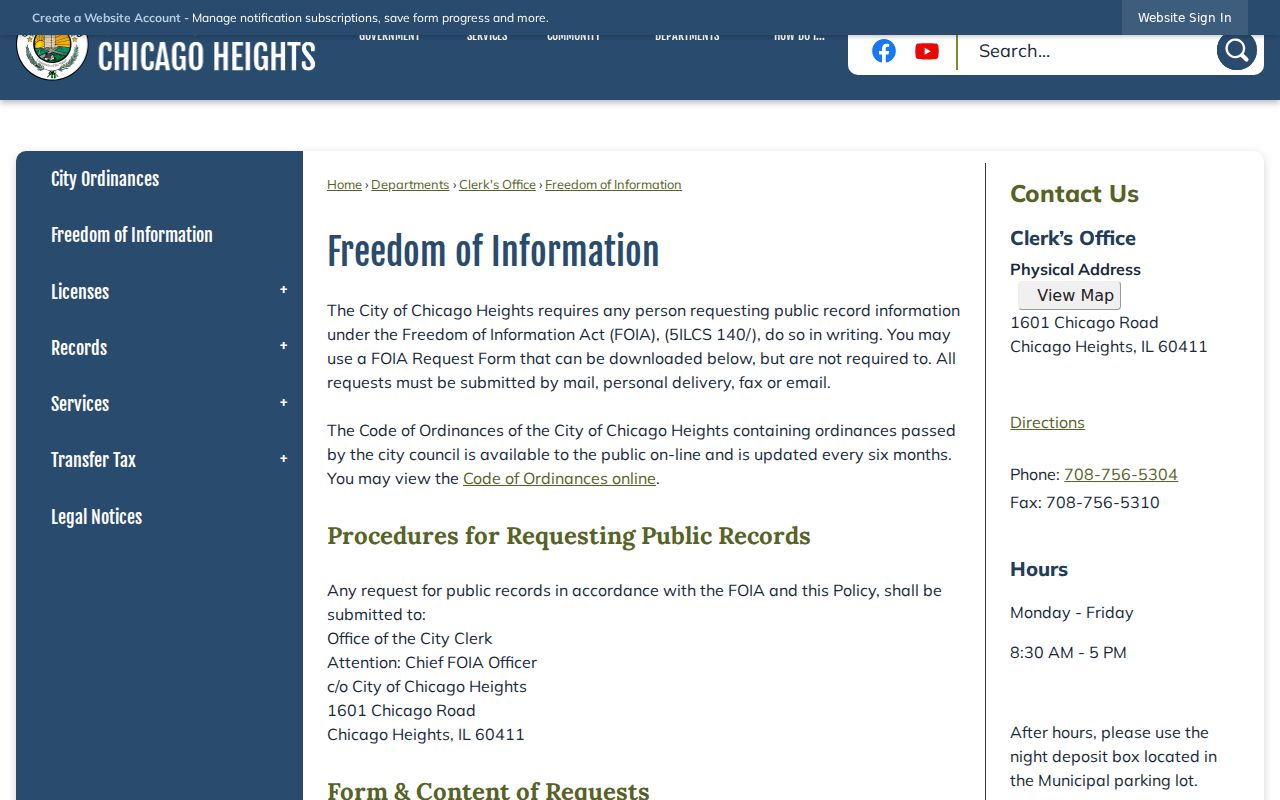
Starting with a narrow description and the responsible department gives the Clerk a reproducible request instead of a vague demand for every record about a person.
The Illinois FOIA guidance supplies the statewide framework and the route for questions about a state-agency request.
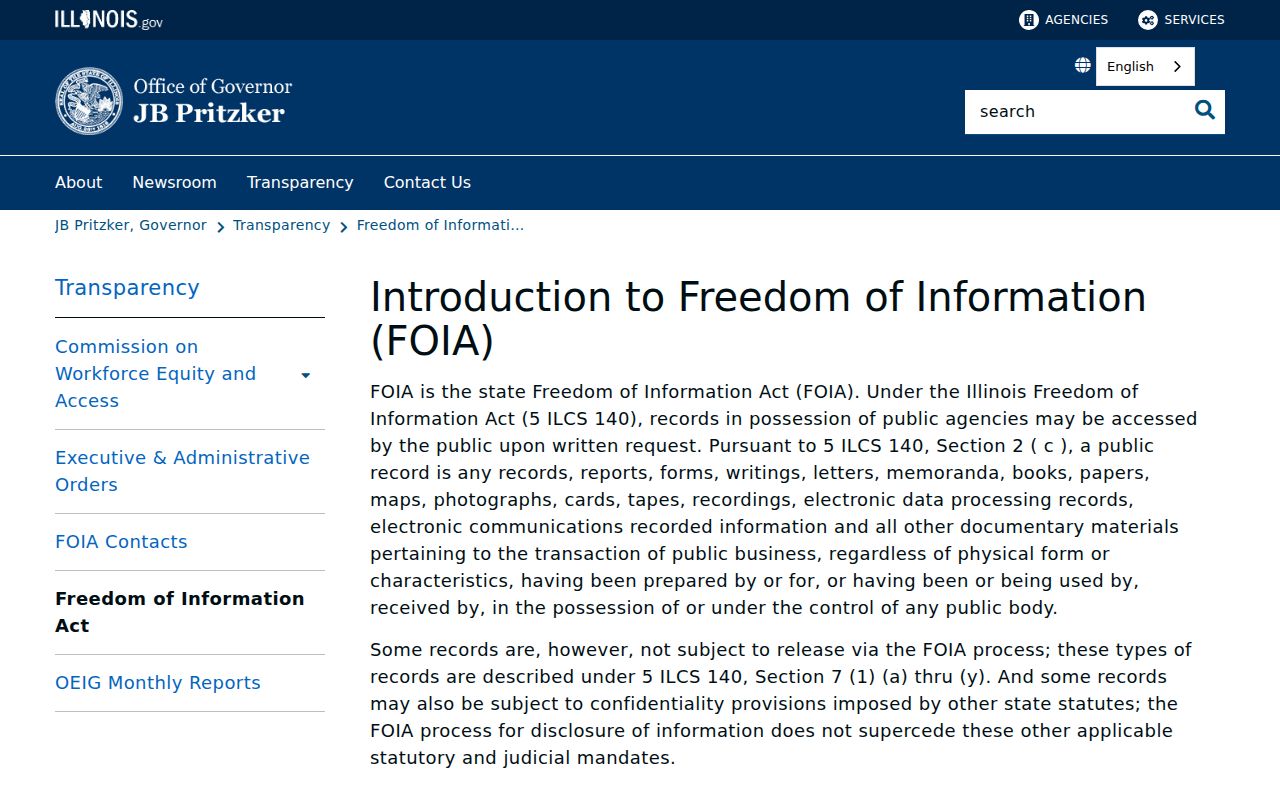
City and state requests use the same statute, but each must still go to the agency that actually holds the described record.
Privacy Changes the Chicago Heights Record Trail
Illinois Safe at Home provides an address-confidentiality program for eligible survivors, and protected voter information, sealed or expunged court matters, juvenile files, driver records, and newer vital records have separate access limits. Those omissions are safety rules, not missing search techniques. Utility customer lists and motor-vehicle data are not public substitutes for a directory. Respect the narrow purpose of each official portal and never publish a sensitive lead merely because another document repeats it.
Lawful personal use only. Keep searches tied to family history, an estate, civic transparency, property research, reconnection, or consumer safety. Do not use an address lead to stalk, harass, threaten, or evade a confidentiality protection.
The Illinois Attorney General’s Address Confidentiality Program page explains the protection available.
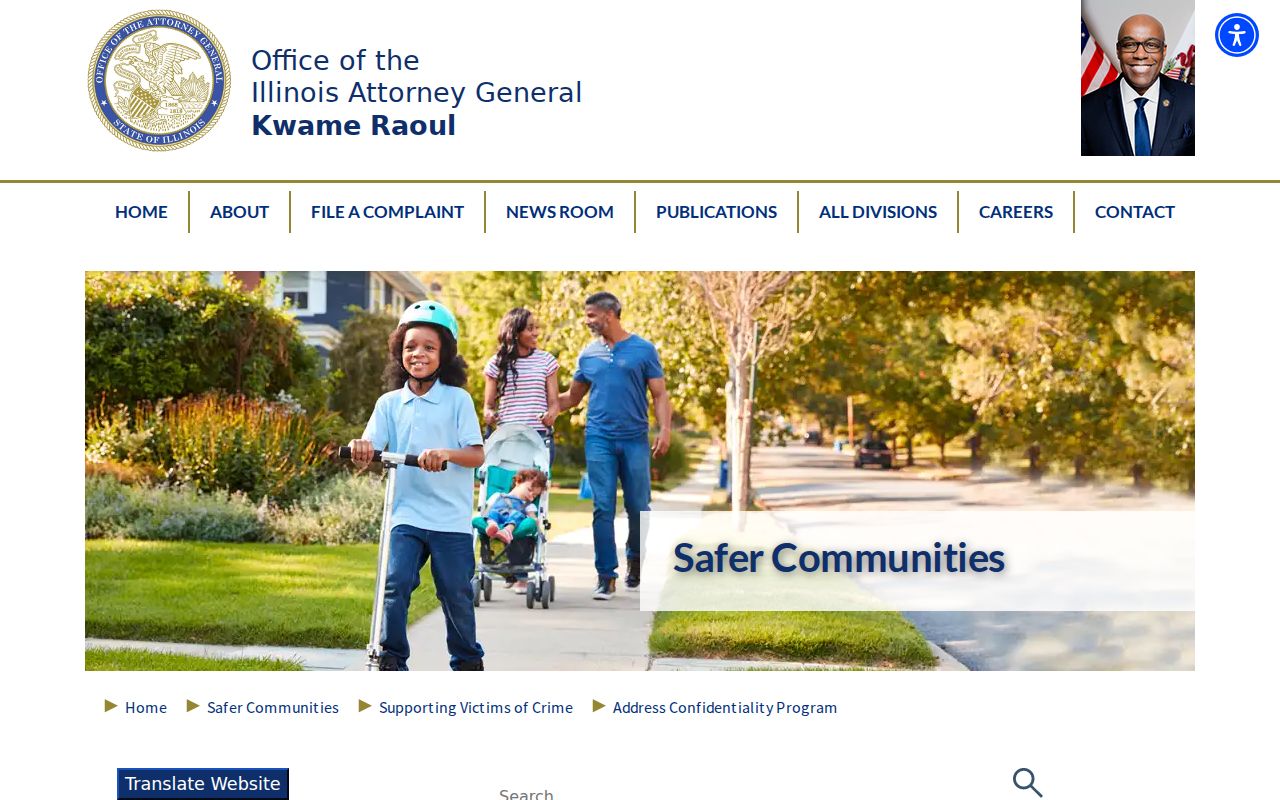
The program is a practical reason to minimize disclosure: confirm only what a lawful personal, family-history, estate, civic, or consumer-safety purpose genuinely requires.
ZIP Boundaries Do Not Define Chicago Heights
USPS identifies the Chicago Heights Post Office at 1333 W. End Avenue with ZIP+4 60411-9998, and an archived postal destination group pairs 60411 and 60412. Census geography adds another layer: six ZCTAs touch city geometry, including 60411, 60422, 60425, 60430, 60461, and 60466. A ZCTA is a statistical approximation, not the live USPS delivery boundary, and neither automatically matches the incorporated city line.
Verify a specific mailing address with USPS, then inspect its parcel and municipal fields in CookViewer. Search historical material under Bloom Township, nearby mailing names, directory publisher and year, and the legal description when a modern ZIP produces no result. A Chicago Heights ZIP code directory must distinguish mailing city, township, tax municipality, ZCTA, and ward because each describes a different aspect of one place.
Historical Chicago Heights Resident Directory Shelves
The documented directory trail is useful but discontinuous: W.J. Hayne & Co. for 1905–06, S.H. Moore for 1908–09, McDonough for 1916 and 1923–27, Directory Service in 1937, Calumet Directory in 1941, and Haines or Criss-Cross material in the 1980s–90s. Telephone-book holdings include selected years beginning in 1913, while Chicago Heights Star microfilm is listed from 1906 onward and Signal for 1911–13. These dates are holdings leads, not proof of a continuous annual run.
Chicago Heights Public Library, 25 W. 15th Street, is the first reference stop for the History Room, microfilm, directories, maps, clippings, and Ask a Librarian service. South Suburban Genealogical & Historical Society in Hazel Crest reports more than 14,000 reference items, including regional directories, cemetery, naturalization, census, yearbook, church, newspaper, and family collections; verify its storm-related closure status before visiting. The preservation committee notes that Chicago Heights has no separate historical society, making the library, SSGHS, and committee a distinctive three-part network.
The Chicago Heights archive search adds searchable municipal budgets, audits, and news to the older library trail.
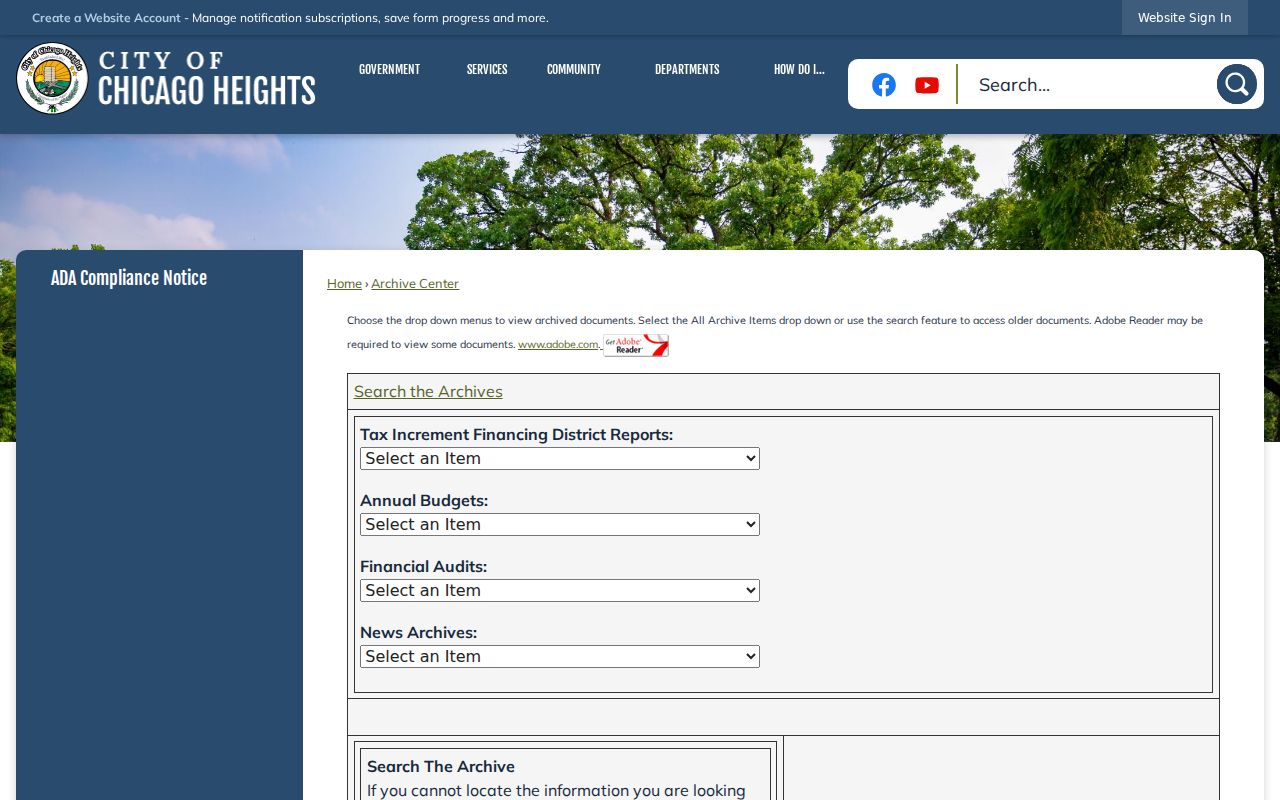
The archive fields help date public actions, while a directory entry can establish that a printed source associated a name with an address in a given publication year. Pair it with neighboring years, a census, deed, obituary, or newspaper item before calling it a continuous residence. The Chicago Heights city directory gives the complete shelf-by-shelf workflow.