
Chicago Heights Lookup Coverage
A Chicago Heights resident lookup is not one master search. Cook County, the city, Illinois agencies, courts, and local history institutions each hold a limited record set. Choose the source that can answer the precise question, then read its result within that limit. A filing, event, or parcel record may connect a name to a date, but none alone proves current residence.
| Record | What It Confirms | Where to Search | Access |
|---|---|---|---|
| Cook County court docket | Case number, party, filing date, type, status, and events | Odyssey Case Search or District 6 | Online summary; terminal and clerk file fallback |
| Voter status | One matched voter’s status and polling information | Illinois Registration Lookup | Free exact-person match; no open roster |
| Vital event | Eligible birth, death, or marriage information | City Clerk, Cook County Clerk, or IDPH | Restricted copies; older genealogy paths |
| Credential or entity | Professional status or a business filing role | IDFPR, Illinois SOS, or city BS&A | Public lookup; filing address is not residence |
| Historical presence | Dated name, address, school, obituary, or cemetery clue | Library and SSGHS collections | Catalog, reference request, microfilm, or visit |
Use the court tool for a known public case, the state election tool for a person checking a registration, and the local or county registrar for an eligible family event. For a former classmate or ancestor, go first to yearbooks, directories, newspapers, and cemetery indexes. A property question should shift to the Chicago Heights street directory process, which follows an address and PIN rather than guessing from a name.
Frame a Chicago Heights Name Search
Define the goal before typing a surname. “Was this person named in a public Cook County case?” calls for Odyssey. “Is my registration active?” calls for the Illinois voter match. “Did this relative die in Chicago Heights?” may call for the local registrar, Cook County, IDPH, or a genealogy form depending on date and eligibility.
Write down the known spelling plus variants, initials, maiden names, and one or two date ranges. Chicago Heights migration history can produce changed spellings or Anglicized forms in old directories, newspapers, church registers, and deeds. Preserve the wording found in each source. Do not collapse two same-surname records because they appear in the same city.
Two-anchor rule. Confirm a name with two independent points, such as a case number and date, or a directory address and census relationship.
Search Chicago Heights Court Records
The Cook County Odyssey Case Search accepts a party name in “Last, First” order or a case number. The official user guide documents wildcards and advanced Party, Case, General, Judgment, and hearing filters. Chicago Heights is served by the Circuit Court’s District 6 courthouse in Markham.
| Search field | How to use it | Result or limit |
|---|---|---|
| Party name | Last, First; try initials and supported wildcard forms | Candidate party and case rows |
| Case number | Use when a notice or file already supplies it | Most direct route to a docket |
| Case filters | Type, status, file-date range, judicial officer | Narrows same-name results |
| Hearing filters | Location, date range, courtroom, party, or attorney | Calendar and event context |
| Result columns | Case number, defendant, file date, type, status | Up to 200 results; columns may be selected |
The web docket is informational and may lag. It is not the official file. Use the District 6 public-access terminal or clerk counter for recent, incomplete, or copy-dependent matters. Sealed, expunged, juvenile, family, and confidential material does not become public through a name query.
The statewide portal offers another controlled channel. Open Illinois re:SearchIL to see its current access point.
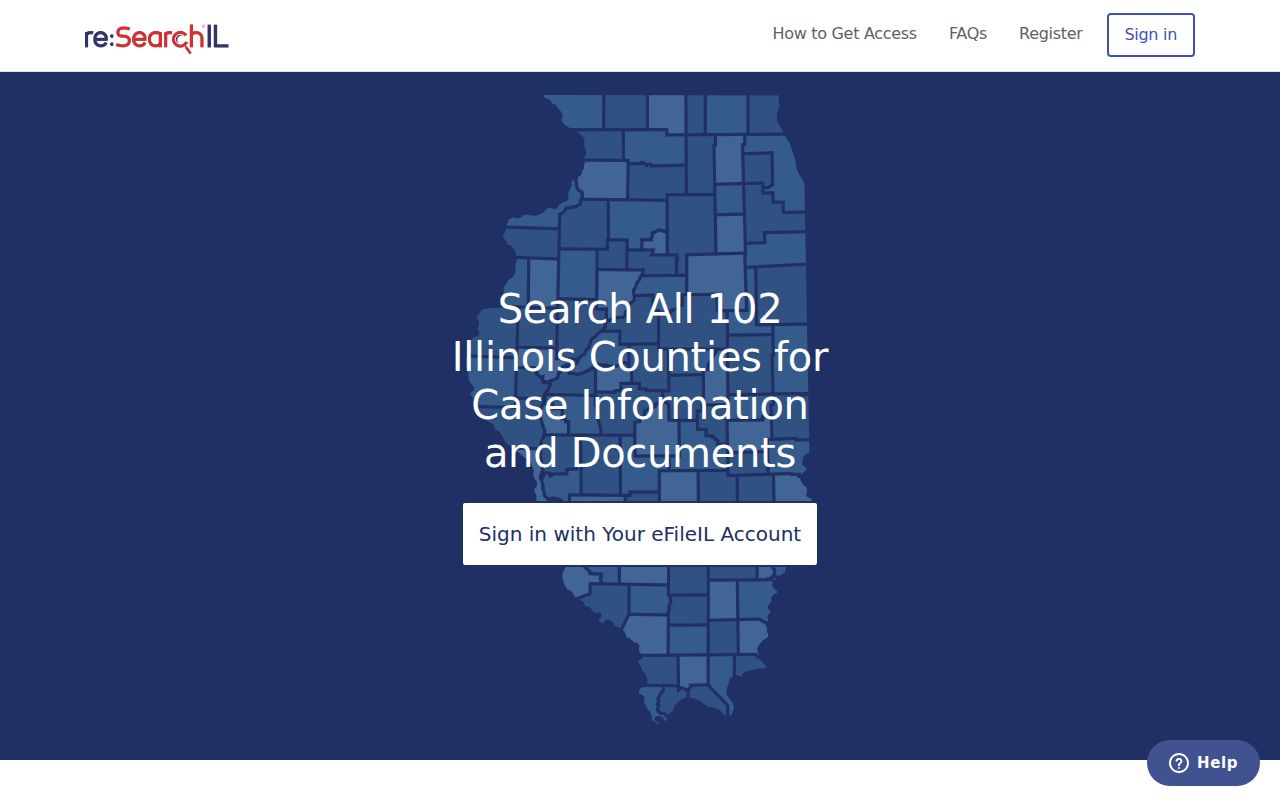
This screen is a statewide electronic repository, but remote-access rules and county participation determine which documents are visible.
Note: District 6 is at 16501 S Kedzie in Markham, and the clerk’s published phone is 708-232-4551.
Read Chicago Heights Lookup Results
A result row is a starting point. The Odyssey guide shows a schema that can include case number, party or defendant, file date, case type, status, identifiers, and hearing or event dates. Recent events appear in reverse time order in case view. The portal initially displays a limited set before a user asks to show more.
- Case number, which anchors the court file.
- Party or defendant name as indexed.
- File date, type, and current docket status.
- Hearing date, event type, and courtroom detail when public.
- Disposition information when present in the public summary.
Do not treat a docket hit as proof of identity, guilt, or a current address. Compare the case number, municipality, file date, and any lawfully displayed age or date fact. For an official copy, ask the Clerk for the electronic or paper file and current certification fee.
Verify Chicago Heights Resident Records
Verification means linking the same person across records without reading more into any one record than it states. Start with a source suited to the question. Then add one independent source whose date, relationship, address, PIN, or case number agrees. A resident lookup based only on a common name is too weak.
- Record the exact name, variant spellings, and the date range tied to the question.
- Run the proper official index and save its case number, event date, file number, or other stable key.
- Check a second source, such as a directory, eligible vital record, court event, or business filing, for an agreeing date or relationship.
- Resolve conflicts with the custodian. Use a courthouse terminal, certified copy, mail form, or reference request when the web result is incomplete.
- Docket
- The court’s dated list of filings, hearings, orders, and other events in one case.
- Index versus image
- An index lists facts that point to a record; an image shows the filed page and may have separate access or cost.
- Certified copy
- A copy the custodian formally attests is accurate, usually requested through the office and subject to rules and fees.
Confirm Chicago Heights Voter Status
The Illinois voter registration lookup is a specific-person match, not a public list of Chicago Heights residents. It asks for name, birth date, ZIP, street number, and a street name selected dynamically. Those extra fields help keep a same-name search from returning a broad roster.
A successful match may confirm status and polling information. It does not disclose ballot choices. Full computerized voter data follows a separate eligibility, certification, fee, and bona fide political-purpose process, so it is not a fallback for browsing a street. Protected voter information can also remain hidden.
When the state tool does not match, check spelling, ZIP, house number, and the street choice. For your own record, use the Cook County Clerk voter-information channel or election office to correct it rather than assuming the person is unregistered.
Confirm Chicago Heights Family Events
Birth and death records are not open name lists. Chicago Heights acts as local registrar for events recorded in the city and at St. James Hospital, while the Cook County Clerk and IDPH genealogy channel provide county and state routes. Eligibility, identification, relationship, and direct-interest rules apply to certified copies.
The local birth page reports records back to 1869 and limits certified access to the named adult, a listed parent, guardian or legal representative, or a court-authorized requester. The death page reports local records from 1902 and requires immediate-family proof or a legal estate interest. Mail and in-person requests are documented; Cook County also offers suburban counter and authorized vendor channels.
Older genealogy routes are broader but still rule-bound. Illinois permits uncertified genealogy access to births older than 75 years and deaths older than 20 years. Cook County’s genealogy form also lists marriages older than 50 years, while state archive transfer periods differ. IDPH marriage verification covers an index from 1962 onward, but it is not a certified county marriage copy.
Find Chicago Heights Historical Connections
A former classmate or family historian can use the Chicago Heights Public Library’s yearbooks, city directories, Star and Signal microfilm, maps, and clippings. The South Suburban Genealogical & Historical Society adds census material, family files, naturalization references, church histories, and a large cemetery index. Historical names must remain tied to their source date.
For an heir question, begin with a public probate docket, then compare an obituary, deed, directory, cemetery entry, or eligible vital record. Probate can identify case parties or events, yet a web summary may omit the document needed to prove a relationship. The court clerk and District 6 terminal are the proper next stops.
The Chicago Heights city directory collections explain the historical shelves in depth. A missing obituary index is not permission to guess; ask the library for a newspaper date range or clipping-file check.
Check Chicago Heights Filing Affiliations
The Illinois professional license lookup can verify a credential or business licensee. Search with the formal name and reduce the entered detail if a correct query returns no result, as IDFPR guidance suggests.
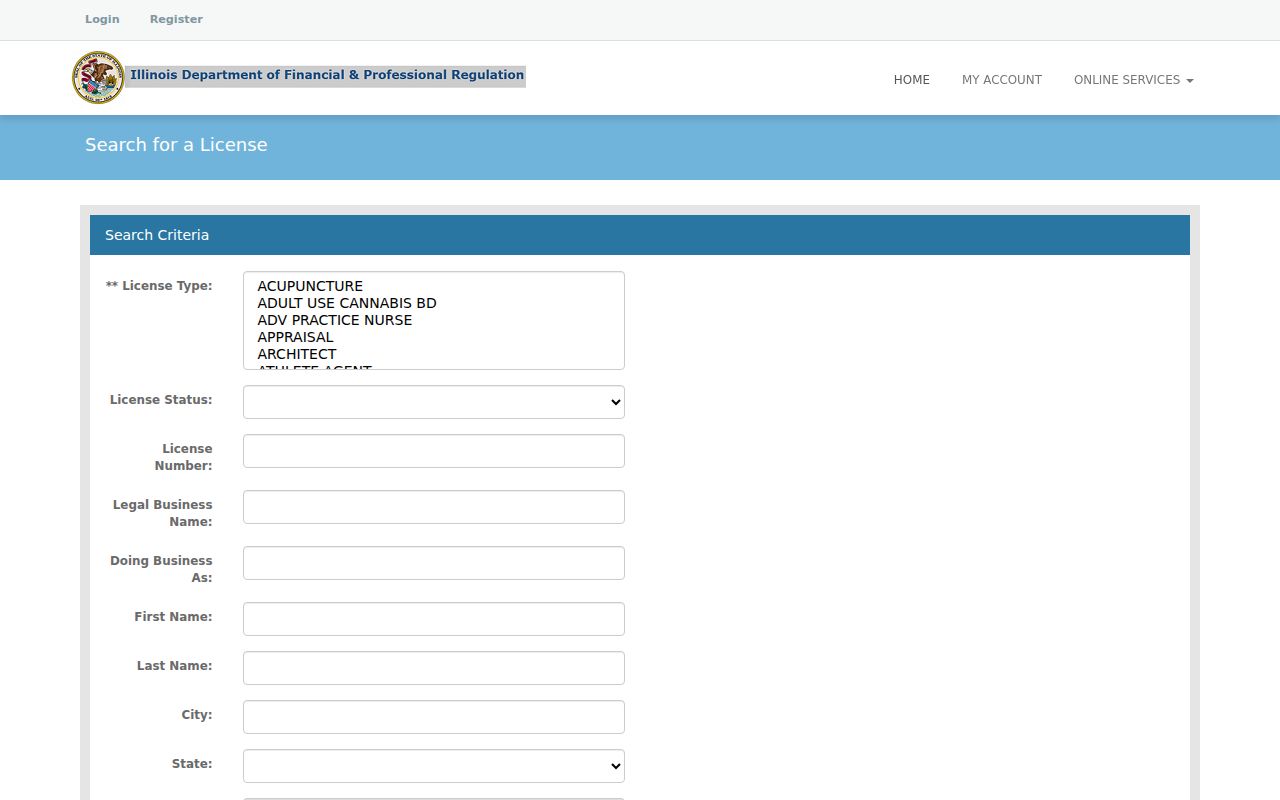
The captured screen points to the official credential source; its dynamic field list was not stable enough to document, so check the live labels.
The Illinois Secretary of State entity search supports business name, registered agent, president, secretary, manager, file number, keyword, and partial-word searches. Chicago Heights BS&A can search city business-license material by address, name, parcel, or license number. A registered office or business address shows a filing affiliation, not personal residence.
When Chicago Heights Lookup Ends
Online silence is not always a negative answer. Use the access channel tied to the record: District 6 terminals and the clerk counter for court files, City Hall or Cook County forms for eligible vital records, the library’s Ask a Librarian service for microfilm, and SSGHS or Illinois archives for older indexes.
For a specific releasable municipal record that is not published, the Chicago Heights FOIA route accepts an online form plus printable mail, email, fax, and in-person channels. Illinois FOIA, 5 ILCS 140, does not override sealed courts, protected vital records, voter restrictions, or other exemptions. Describe the department, date range, and exact record instead of requesting a resident profile.
Cook County Archives currently offers remote reference while its public facility is closed. Court clerk phone help, written copy requests, local microfilm, and archive correspondence are valid parts of a resident lookup when a portal is incomplete.
Note: Record the search date because portal coverage, indexed-through dates, and remote-access rules can change.
Chicago Heights Lookup Privacy Limits
“Public record” does not mean open resident profile. Illinois vital statutes restrict certified birth and death records. Court rules withhold sealed, expunged, juvenile, and confidential material. The voter status tool requires a close personal match, while driver addresses, utility accounts, and protected voter information are not lawful substitutes.
The Illinois Safe at Home program gives eligible survivors a substitute address for public records and mail forwarding. Never try to defeat that protection. If an official record is wrong, use the custodian’s correction or appeal process and keep the source, date, and record identifier.
The Cook County Individual in Custody Locator is a terms-gated official system for a specific current custody question, not a general resident roll.
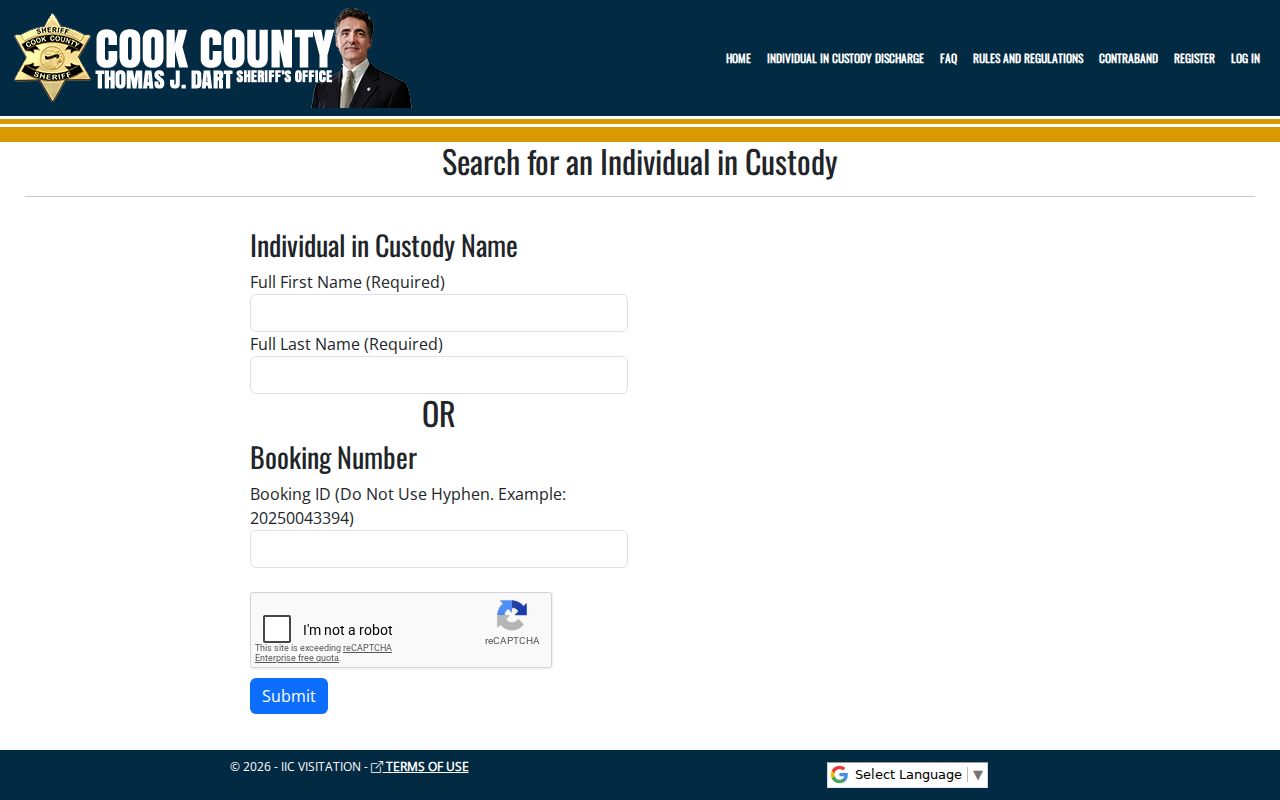
A custody result describes status in that system and should not be converted into a home-address claim or a conclusion about another person with the same name.
Lawful use. A Chicago Heights resident lookup is for personal, lawful research. Never use a record to stalk, harass, intimidate, or expose a protected person.